Best viewed with Internet Explorer.
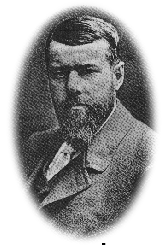
Max Weber (1864 - 1920)
 Max Weber
analyzed
bureaucracy as the most logical and rational structure for large
organisations. Bureaucracies are founded on legal or rational authority
which is based on law, procedures, rules, etc. Positional authority
of a superior over a subordinate stems from legal authority as opposed to charismatic
authority which stems from the personal qualities of an individual. Max Weber
analyzed
bureaucracy as the most logical and rational structure for large
organisations. Bureaucracies are founded on legal or rational authority
which is based on law, procedures, rules, etc. Positional authority
of a superior over a subordinate stems from legal authority as opposed to charismatic
authority which stems from the personal qualities of an individual.
|
According to Weber efficiency in
bureaucracies comes from:
(1.) clearly defined and specialized functions;
(2.)
use of legal authority;
(3.) hierarchical form;
(4.) written rules and
procedures;
(5.) technically trained bureaucrats;
(6.) appointment to positions
based on technical expertise;
(7.) promotions based on competence and
(8.) clearly
defined career paths.
|
|
|
|
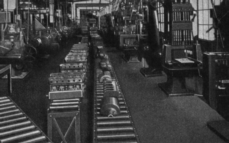
In Germany Webers and Taylors approach were connected only after 1923
to the idea of "Rationalisierung"
and the REFA-movement, when German bosses
went on a "pilgrimage" to
Fords conveyor belt production sites.
|
In 1911 the title of Taylors book had been translated as "Die
Grundsätze der wissenschaftlichen Buchführung"
(sic!).

Contact: wolfgang.arlt@fh-stralsund.de
Office: 1/132, Tel. (03831) 45 6961
|

