Best viewed with Internet Explorer.
(9) Page 3
Kaizen,
Kanban and TQM
Kanban is the Japanese extended version of "just-in-time".
JIT related originally only to the timely delivery
of parts to the production line to save storage
costs. Kanban expands this principly to all parts
of the production process.
The word originates from the "card"
 with
which material is ordered from the previous stage
of production. Quality Circles (QC) are a crucial component of the Kanban system. QCs
provide for dynamic centers where employees are able to discuss and find
solutions to various problems within the team's boundaries of production. with
which material is ordered from the previous stage
of production. Quality Circles (QC) are a crucial component of the Kanban system. QCs
provide for dynamic centers where employees are able to discuss and find
solutions to various problems within the team's boundaries of production.
Kaizen 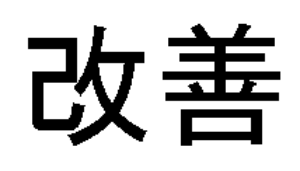 (neverending
improvement) is based on the idea, that nothing
is perfect, every process and product can be bettered
without a final point, the way is the goal. (neverending
improvement) is based on the idea, that nothing
is perfect, every process and product can be bettered
without a final point, the way is the goal.
Using Kaizen helps to reduce the barrier between
R+D and production and to translate technological
progress into better products within the current
product line - therefore saving money and time at
the same time.
For successful Kaizen operations the full support
of all staff members is necessary, an intensive
top-down and bottom-up communication process is
essential and the satisfaction of customers and
staff members is a central criterion to measure
success.
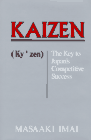
KAIZEN as originally defined in the book of: "KAIZEN, the Key to
Japan's Competitive Success", by Masaaki Imai, is:
KAIZEN means improvement. Moreover, KAIZEN means continuing improvement in
personal life, home life, social life, and working life. When applied to the
workplace KAIZEN means continuing improvement involving everyone - managers and
workers alike.
|
|
http://www.kaizen-institute.com/kzn.htm
TQM will be talked about in the presentation.
  
Contact: wolfgang.arlt@fh-stralsund.de
Office: 1/132, Tel. (03831) 45 6961
|

