|
|
Best viewed with Internet Explorer.
(1) Page 5
Development
of Working : Non-Working Time in Germany
- Before 1800: App. 200 working
days/year, long hours but also long lunch breaks
(crafts), seasonal working (farmers), relatively
less work (aristocracy/military)
- After 1800: Industrialisation,
six working days/week, long working hours (workers),
relatively more work (bureaucracy, capitalists)
- After 1900 (Mundt 2001, S. 41):
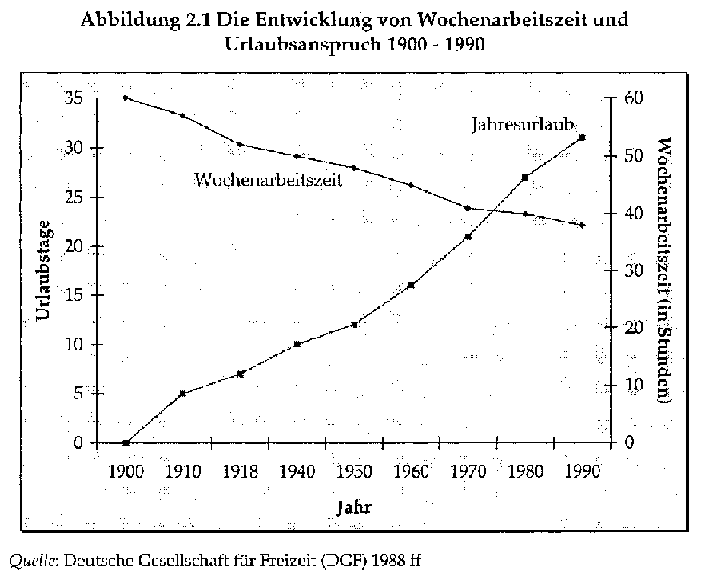
- After 1990: Working time (incl.
travel to and from work) falls below 2000 h/year
mark.
- Working ceases to be the normal
way of spending the majority of time for the
majority of people.
Extreme example: Mecklenburg-Vorpommern
|
"In Mecklenburg-Vorpommern leben gemessen an der Zahl der Einwohner
europaweit die wenigsten Menschen im arbeitsfähigen Alter. Das berichtet das
Europäische Statistische Amt Eurostat in seinem Jahresbericht 2001. Nach
Angaben der Statistiker ist Mecklenburg-Vorpommern diejenige europäische
Region, in der das Verhältnis zwischen Menschen im arbeitsfähigen Alter (20 bis
60 Jahre) zu Rentnern und Jugendlichen am schlechtesten ist. Von den 1,8
Millionen Einwohnern seien 1998 rund 44 Prozent nicht im arbeitsfähigen Alter
gewesen, berichteten die Statistiker gestern. 23,1 Prozent der Einwohner waren
jünger als 20 Jahre, und 20,6 Prozent älter als 60." Ostsee-Zeitung
8.3.02
|
  
Contact: wolfgang.arlt@fh-stralsund.de
Office: 1/132, Tel. (03831) 45 6961
|
|

