|
SUPPLY SIDE:
Transportation
and Mobility
Transportation - The way stops being
the goal
Tourism is always connected to
transportation - without change of place no travelling.
Until recently the way itself was an
important part of the travelling experience, because it was, among
others,
 expensive expensive
long
uncomfortable
unreliable
dangerous
"Auf Reisen geh'n" "Fremdenverkehr"
"Touring"

Today for most tourists the
transportation to and from the destination is only a nuisance.
Exceptions: Cruise, Nostalgic trains
Authenticity and transportation
Tourists are used to travel long distances by
car or airplane to other regions or countries searching for authentic
experiences.
Yet, after the introduction of railways, many
critics argued that the fast and detached mode of transportation makes you
unaware of the real distance travelled, thereby already making any "authentic"
experience impossible.
Today, many travellers still look down on "mass tourists"
who travel to a church or monestary on top of a mountain by bus or cable-car
instead of getting the "authentic" experience of walking or climbing
up.
Development of transportation
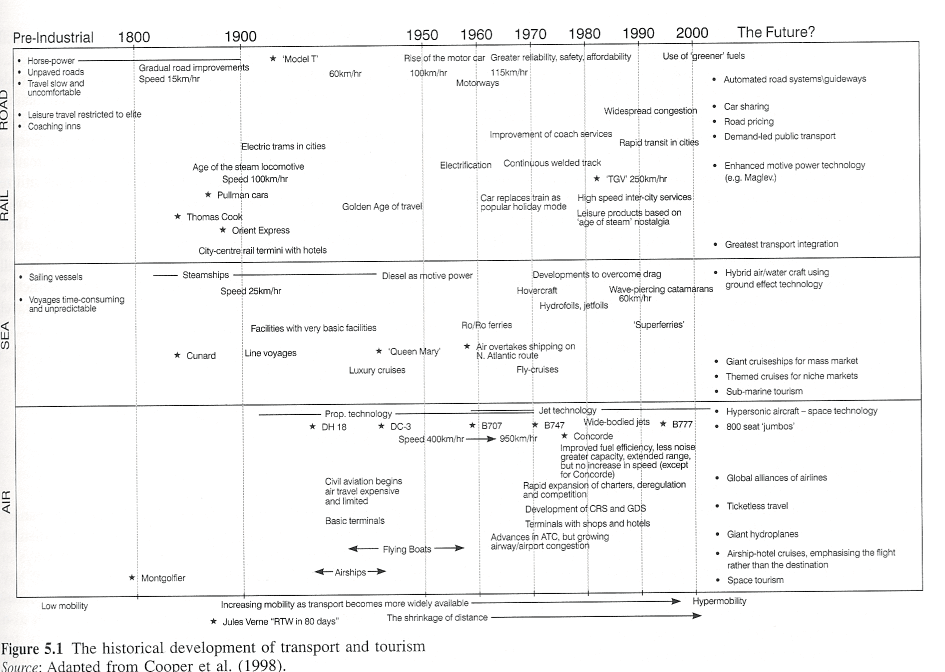
The 'official' version: "Cook's idea to offer excursions came to him while waiting for the stagecoach on
the London Road at Kibworth. With
the opening of the extended Midland Counties Railway, he arranged to take a
group of 570 temperance
campaigners from Leicester to a
rally in Loughborough,
eleven miles away. On 5 July 1841, Thomas Cook arranged for the rail company
to charge one shilling per person
that included rail tickets and food for this train journey." Wikipedia
Fixed, variable, social, environmental
Costs
The availability of travel is not only
depending on the technological development but at the same time and connected to
it with the
costs involved for the individual
traveller or provider of transportation and the costs involved for the society.
These can be further differentiated
between
fixed costs and variable costs
and
social costs and environmental
costs
|
What are these costs? -
Use
the example of "Low-cost" carriers.
|
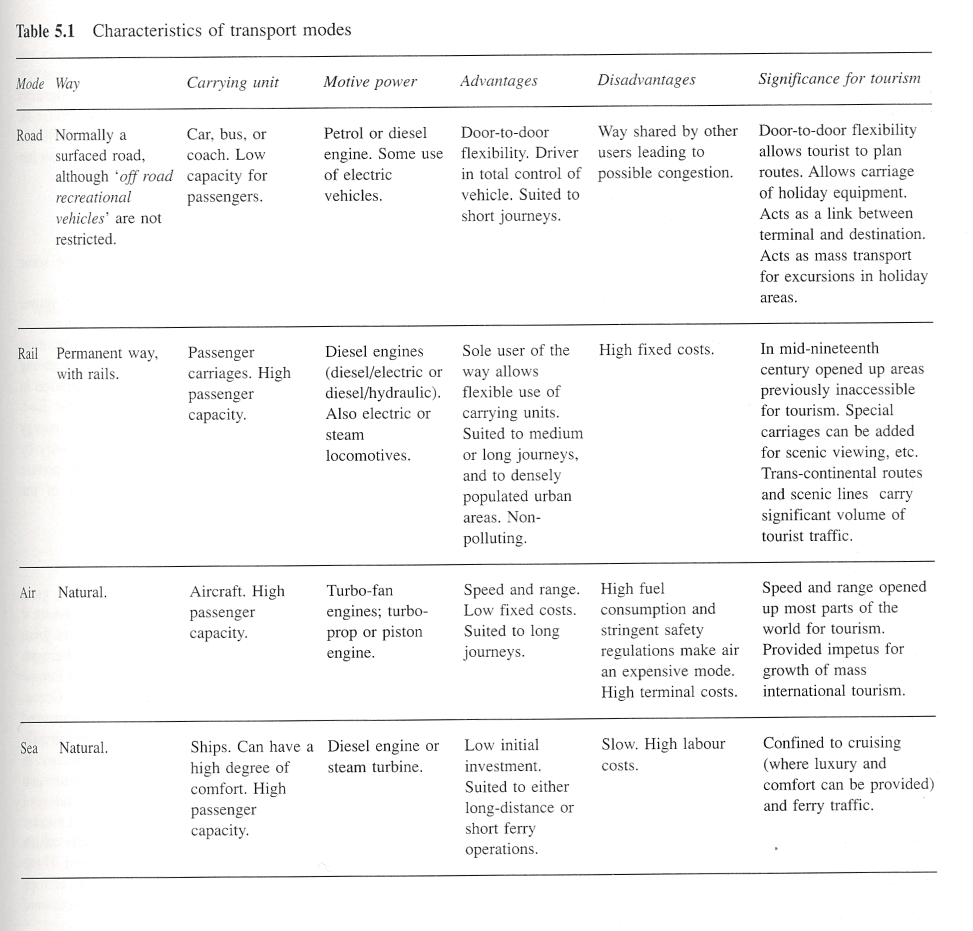
Tourism companies
connected to different forms of transport:
|
|
Directly
|
Indirectly
|
Impact
|
|
Road
|
Car Rental - International
Coach Operator - National
|
Automobile industry,
service
(petrol, washing, repairing etc.)
|
Major change of landscape
|
|
Rail
|
National Rail
Co. - Partly government owned
Private Rail Co. -
International
|
Locomotive / Rolling
stock production, service
|
Definition of regional
and local centers
|
|
Air
|
Airlines - From government
owned to private
From indipendent to associations
(Oneworld, Skyteam, Star Alliance)
Hub and spoke
vs. Point-to-point
|
Duopoly aircraft industry,
Airports, service
|
Development from air-station
to mall
|
|
Sea
|
Ferry Co., Cruise Ship
Co.
|
Shipbuilding Industry,
Harbours,
|
Important only for coastal
areas/islands
|
|
Space
|
|
|
|
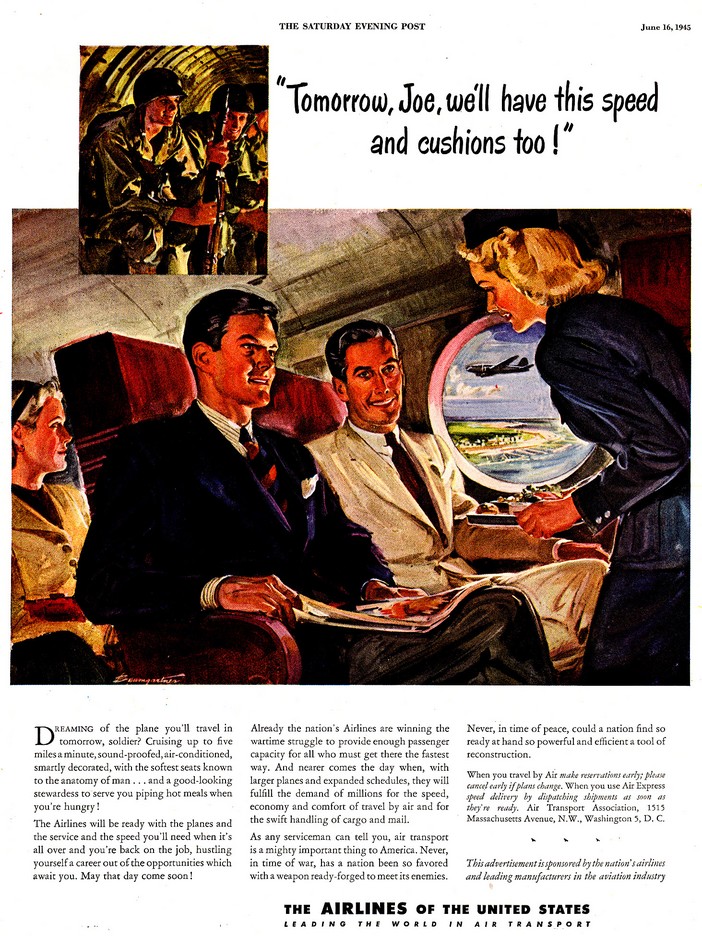
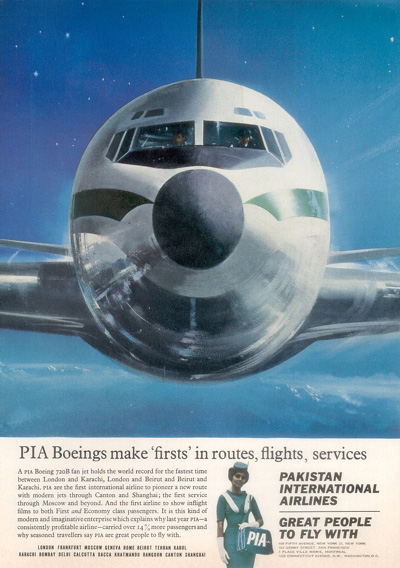
Transportation,
travel experience and distance

|
How
do "Low-cost" carriers communicate the diminishing
importance of the distance and the travel experience?
|
Mobility
Tourism is based on travel,
even if travel has become ever easier and faster.
Information can travel
at the speed of light today with almost no costs involved.
How about tourism if travel
time and costs also will disappears?
Teleportation breakthrough made
Scientists have performed successful teleportation on atoms for
the first time, the journal Nature reports.
The feat was achieved by two teams of researchers working independently on
the problem in the US and Austria.
The ability to transfer key properties of one particle to another without
using any physical link has until now only been achieved with laser light.
Experts say being able to do the same with massive particles like atoms could
lead to new superfast computers.
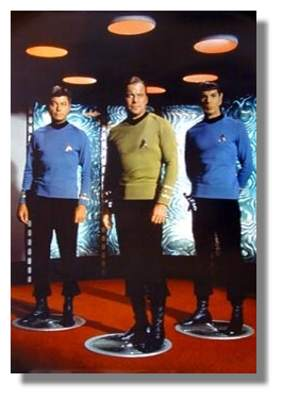
This development is a long way from the transporters used by Jean-Luc Picard
and Captain Kirk in the famous Star Trek TV series.
When physicists talk about "teleportation", they are describing
the transfer of "quantum states" between separate atoms.
These would be such things as an atom's energy, motion, magnetic field and
other physical properties.
And in the computers of tomorrow, this information would form the qubits (the
quantum form of the digital bits 1 and 0) of data processing through the
machines.

Atomic dance
What the teams at the University of Innsbruck and the US National Institute
of Standards and Technology (Nist) did was teleport qubits from one atom to
another with the help of a third auxiliary atom.
It relies on a strange behaviour that exists at the atomic scale known as
"entanglement", whereby two particles can have related properties even when they
are far apart. Einstein called it a "spooky action".
The two groups used different techniques for achieving
teleportation, but both followed the same basic protocol.
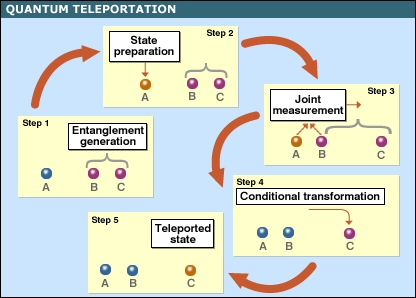
First, a pair of highly entangled, charged atoms (or ions) are created: B and
C. Next, the state to be teleported is created in a third ion, A.
Then, one ion from the pair - let's say B - is entangled with A. The internal
state of both these is then measured and the result sent to ion C.
This transforms the quantum state of ion C into that created for A,
destroying the original quantum state of A.
The teleportation took place in milliseconds and at the push of a button, the
first time such a deterministic mechanism has been developed for the process.
'Great potential'
The landmark experiments are being viewed as a major advance in the quest to
achieve ultra-fast computers, inside which teleportation could provide a form of
invisible "quantum wiring".
These machines would be able to handle far bigger and more complex loads than
today's super-computers, and at many times their speed.
"In a quantum computer it's straightforward enough to move quantum
information around by simply moving the qubits, but you might want to do things
very quickly, so you could use teleportation instead," said Nist's Dr David
Wineland.
Professor Rainer Blatt, of the University of Innsbruck, told BBC News Online:
"This is a milestone.
"We are able to teleport in a deliberate way - that is, at the push of a
button. This has been done before, but not in such a way that you can keep the
information there at the end."
Professor Blatt's team, an Austrian-US group, performed the teleportation on
calcium ions. The Nist team in Boulder, Colorado, used ions of the element
beryllium.
Despite this and some differences in the experimental methods used by the two
groups, both teams reached similar values of fidelity - around 0.75.
Fidelity is a measure of how well the quantum state of the second ion after
teleportation resembles the original quantum state.
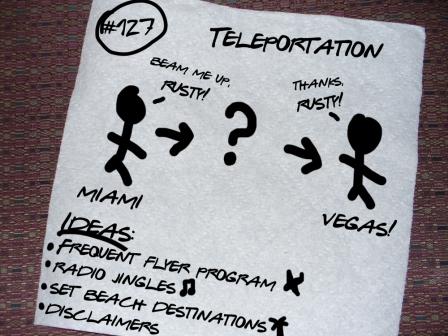
"Businessplan
127"
|