Prof. Dr. Wolfgang Georg Arlt
International Tourism Management


You are on www.arlt-lectures.com

Best viewed with Internet Explorer


2. Sem 8035: Special Tourism Management
           Tu 10.00 - 11.30 h, H 01


  Globalisation and tourism
  Demand side


 - Kiel excursion -


Globalisation - the current status


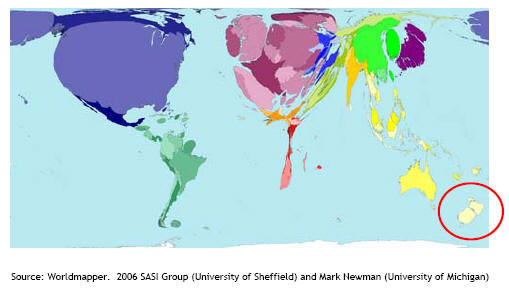
The world according to the number of take-offs
of aircraft registered in the country (2005)


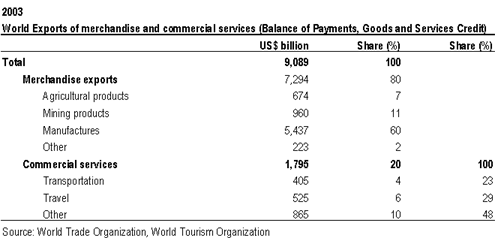
Tourism and the world economy
 
International tourism receipts represented in 2003 approximately 6 per cent of worldwide exports of goods and services (as expressed in US$), almost equal to agricultural products (7%).

When considering service exports exclusively, the share of tourism exports increases to nearly 30 per cent.


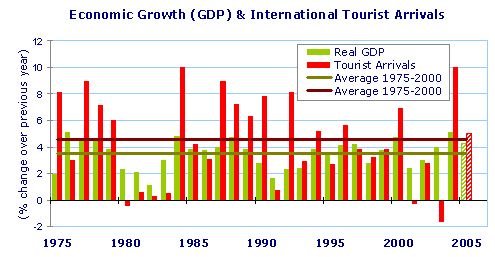
Tourism demand depends above all strongly on the economic conditions in major generating markets. When economies grow, levels of disposable income will usually also rise. A relatively large part of discretionary income will typically be spent on tourism, in particular in the case of emerging economies. A tightening of the economic situation on the other hand, will often result in a decrease or trading down of tourism spending.

In general, the growth of international tourism arrivals significantly outpaces growth of economic output as measured in Gross Domestic Product (GDP). In years when world economic growth exceeds 4 per cent, the growth of tourism volume tends to be higher. When GDP growth falls below 2 per cent, tourism growth tends to be even lower. In the period 1975-2000 tourism increased at an average rate of 4.6 per cent a year and GDP at 3.5 per cent, i.e. tourism grew on average 1.3 times faster than GDP.
 

Source: World Tourism Organization; International Monetary Fund


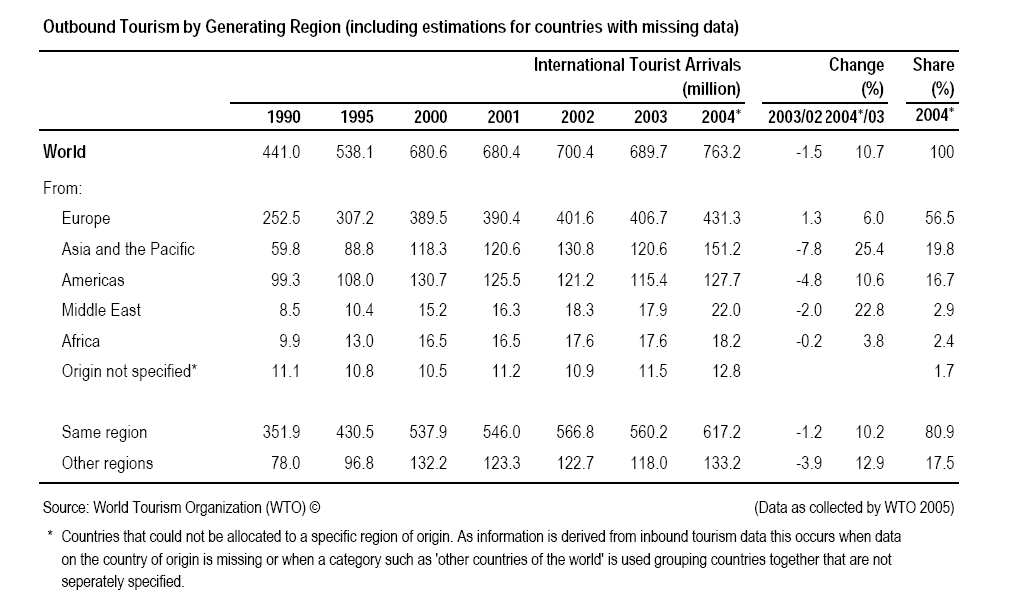
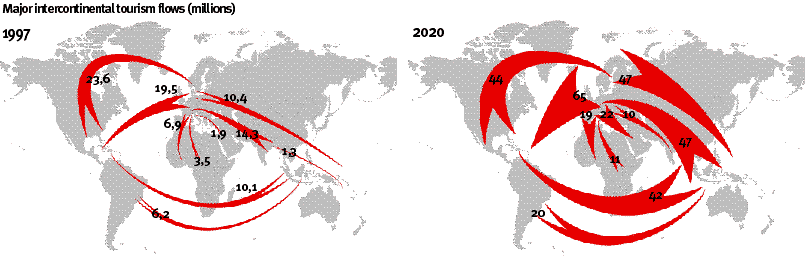
 Globalisation of tourism: Growth and diversification


 img1.gif

 Share of Europe + Americas still almost 3/4, but decreasing, 1/4 from Asia/Pacific, Middle East and Africa


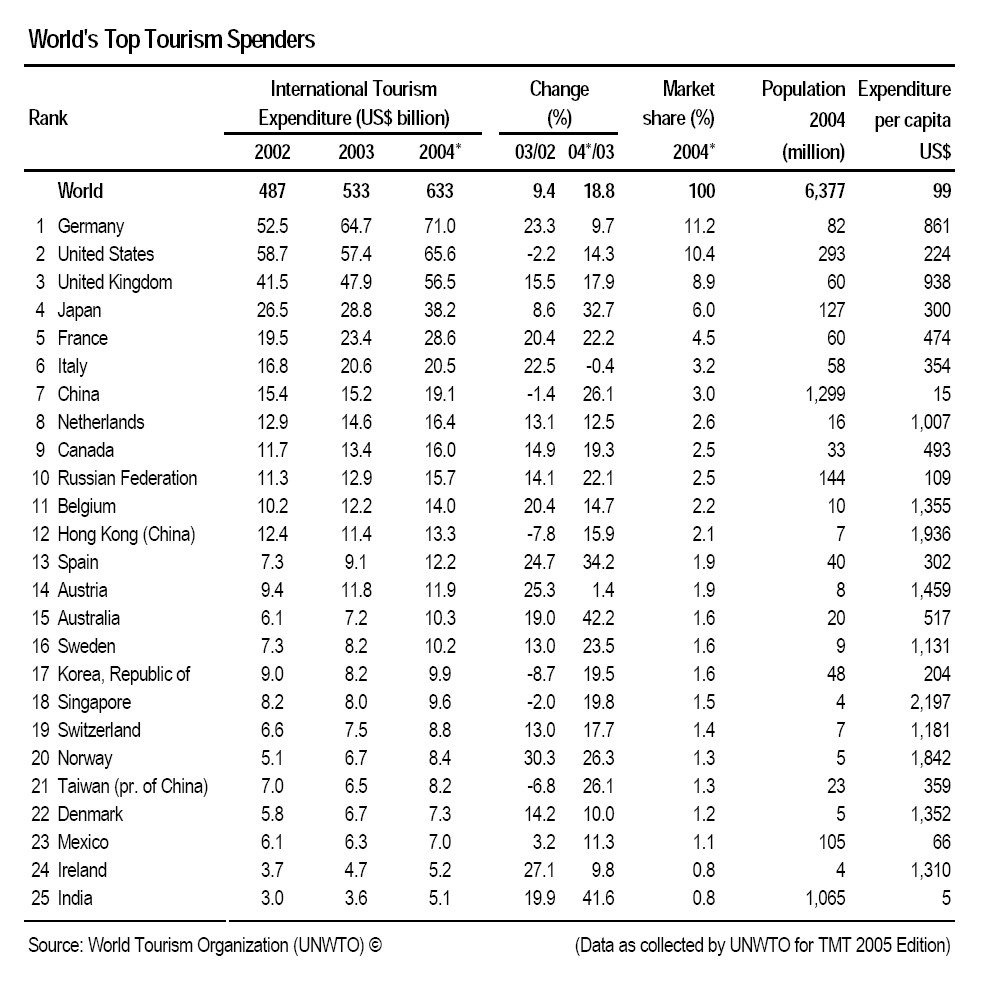
Outbound expenditure by country LINK (pdf)


img2.gif


 Globalisation: Cause and effect of increase in international tourism


"BECAUSE Rimini is Russian," says the woman at the car-hire desk at Rimini airport, when asked why she speaks Russian so well. A week later, the mainly female passengers of your correspondent's charter flight from Moscow are back, tanned, wearing even less, and lugging improbably sized holdalls stuffed with Italian handbags and apparel. (Economist 2005)


Change in demand structure:

 - Leisure tourism globally accepted as part of "modern" life
   (Potential demand)

 - "Death of distance" makes leisure tourism more affordable and imaginable
   (Realized demand)

 - Better information provides information about offers but also shapes images

 - Diversification of source markets leads to diversification of forms of travel and potential conflicts of usage at destinations

 - McDonaldization and Disneyfication of the world reduces the "otherness" of the destination, increases the search for - codified - otherness

 - International tourism globalises and touristifies home markets (food, lifestyle)


 Contact:
Prof. Dr. Wolfgang Georg Arlt
arlt@fh-westkueste.de, Office 2.018, Tel. 0481 8555-513
Consultation hours: Wednesday 11.00 - 12.00 h in my office

home.gif