Everyone agrees that people are an
organisation's greatest asset, and we all know that for an organisation to
succeed everyone has to perform well. To achieve this, people need the right
knowledge, skills and motivation to work efficiently.
No matter what the size or type of your organisation, the
Investors in People Standard is there to help you improve the way you work. You
have to meet the same criteria – or 'indicators' – as other organisations, but
the Standard recognises that you will meet them in your own way. Investors in
People recognises that organisations use different means to achieve success
through their people. The Standard does not prescribe any one method, but it
provides a framework to help you find the most suitable means for achieving
success through your people.
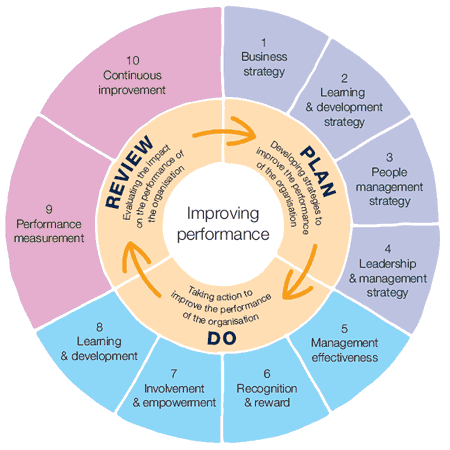
Developing Strategies to Improve the Performance of
the Organisation
An Investor in People develops effective strategies to
improve the performance of the organisation through its people.
1. Business Strategy
- A strategy for improving the performance of the organisation is clearly
defined and understood
2.
Learning & Development Strategy - Learning and
development is planned to help achieve the organisation's objectives
3.
People
Management Strategy - Strategies for managing people are
designed to promote quality of opportunity in the development of the
organisations people
4. Leadership & Management
Strategy -
The capabilities managers need to lead, manage and develop people effectively
are cleary defined and understood
Taking Action to Improve the Performance of the
Organisation
5. Management
Effectiveness -
Managers are effective in leading, managing and developing people
6. Recognintion and
Reward - People's
contributions to the organisation are recognised and valued
7. Involvement and
Empowerment -
People are encouraged to take ownership and responsibility by being involved in
decision-making
8. Learning and
Development -
People learn and develop effectively
Evaluationg the Impact of the Performance of the
Organisation
9. Performance Measurement -
Investment in people improves the performance of the organisation
10. Continuous
Improvement - Improvements are continually made to the way
people are managed and developed
Download brochure Investors in People Standard: IIP_StandardOverview1.pdf