| |
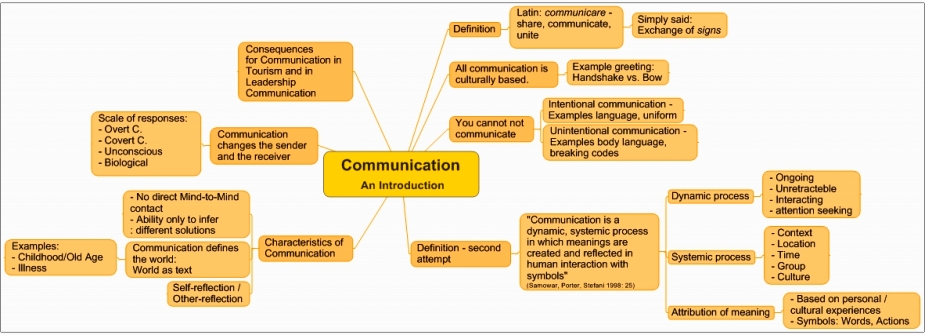
Greetings -
Verbally:
Pergi
mana? Where are you going - Malay
Chibao ma? Have
you eaten - Chinese
How do you do? English
Guten Tag
- Good day, German
also: Hi, Ciao, Hello, Ni hao, Alles
in Ordnung?
Greetings - Non-Verbally:
Bowing, hand-shaking, hugging
Culture is
Communication
|
|
|
Ten tipps for body language from an US blog
(personadev.com)
We’ve all heard of the many benefits of controlling your body
language. It’s been flaunted as one of the many ways to move up through
your company, get that girl or guy you’ve been eyeing from across the
room, and just increase your overall mood.
What body language really comes down to though, is communication.
Sure there are many other benefits of understanding and controlling
your body language, but at their hearts, the benefits come from good
communication.
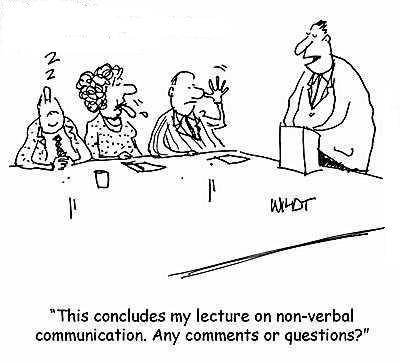
This can be attributed to Albert Mehrabian’s 7%-38%-55% Rule of communication. In this rule, words account for 7%, tone of voice counts for 38%, and body language accounts for 55%. 55%! That means that more than half of communication is done through body language!
Here are my favorite tips to enhance the control of your body language and be a better communicator:
- Eye Contact - To
write about all the subtleties and benefits of good eye contact would
be enough for its own post entirely. For now, keep in mind the basics:
maintain eye contact, but do not stare. This may seem difficult or
peculiar at first, but after a few days of consistency, you’ll realize
your eyes are one of the best ways to convey emotion, feeling, and to
communicate effectively.
- Arms - Arms are clues
to how receptive a person currently is to interaction. Let your arms
rest at your sides or move them behind you. Try to refrain from
crossing your arm as this is usually perceived as a defensive sign.
However, arms work both ways. If you are talking with someone who just
said the wrong thing, don’t hesitate to cross your arms and let them
know.
- Hands - Keep your
palms face up. Open palms are seen as receptive to interaction and
friendly. Hand gestures with you palms facing down can be seen as
dominant and perhaps aggressive. Instead of fidgeting with your hands,
use your hands to describe something as you talk about it.
- Legs - For many
people, legs are the hardest part of our bodies to control. Be aware of
their movement. They have a propensity to move around when we are
stressed or nervous, next time you feel your legs moving, make an
effort to keep them still. As with arms, crossing your legs matters.
There are many ways to cross your legs and although legs have less
importance in determining the receptiveness of a person, be aware that
the “Figure-Four”, which is bringing up your leg to rest on the knee of
the other, is the most defensive stance.
- Posture - Be sure to
stand up straight. Keep your shoulders back and head up. Your spine
doesn’t stop at your neck, it travels up and through your head, so be
sure to keep your head straight too. Slouching not only makes you
appear shorter, but it also portrays you as a person with low
self-esteem.
- Dedicate Attention -
As a kind of catch-all, if you are seriously interested in what someone
has to say, your body language will project that you are.
- Get the Angles -
Angles are everything. Be aware that one’s body in relation to
another’s is an indicator of one’s feelings about those others. We tend
to angle towards people we find attractive, interesting, friendly, and
fun, and we angle ourselves away from those we do not. A subset of
angles is leaning. Whenever seating restrictions, like stadium seating
in a classroom, hinders traditional angling, leaning can be seen
amongst a crowd with the same conditions as angling.
- Smile - Smile
frequently, but not constantly. Smile especially when you are
introduced to someone, but if you keep that smile on your face for too
long, you’ll seem artificial. Laugh frequently, but try to refrain from
laughing at yourself. Laughing at oneself is often seen as a nervous
maneuver. Be aware of other mouth movements. We often tighten our lips
or tilt them to one side when we are thinking. This same pursing of the
lips is used when we are trying to hold back a nasty comment. Be aware
of this because it will be picked up by others and they will get the
feeling you are not happy.
- Watch Your Distance - Create
your own personal space. Let other people know that you have your own
personal space and be careful not to invade theirs. Standing either too
close or too far from a person is not a good thing. Before you make a
decision, observe the average distance between others in the room and
pick a distance accordingly.
- Proactive Mirroring -
When two people are talking and getting along with each other, they
often begin to unconsciously mirror each other’s body language. You can
use this to your advantage by pro-actively mirroring a person to induce
a “getting along” situation. For example, if the other person leans
forward slightly, you lean forward slightly. If the other person places
one hand on her lap, you would do well to do the same. However, give
ample time before imitating and don’t be an exact mirror, let some
changes in their body language go un-mirrored.
DISCUSS
FOR DIFFERENT CULTURES YOU KNOW (YOUR OWN, YOUR
FRIENDS, YOUR ENCOUNTERS IN OTHER COUNTRIES) - Always
true?

|