|
Many intercultural trainings concentrate on the "Do's and Don'ts" of different
cultures:
- Give and receive a namecard to a
Chinese persons always with both hands
- Avoid the number 13 in western
countries
- Do not give knifes or scissors as
a present in China
- Do not slap a German person on
the shoulder as a greeting
- Do not give money as a gift in
Bulgaria ... etc.
Two arguments against such superficial approaches:
a) For an internationally active
manager, it is impossible to know the "Do's and Don'ts" of all cultures and
sub-cultures (always use a 100 US$ bill when snorting cocaine at a Manhattan
party...) in the world.
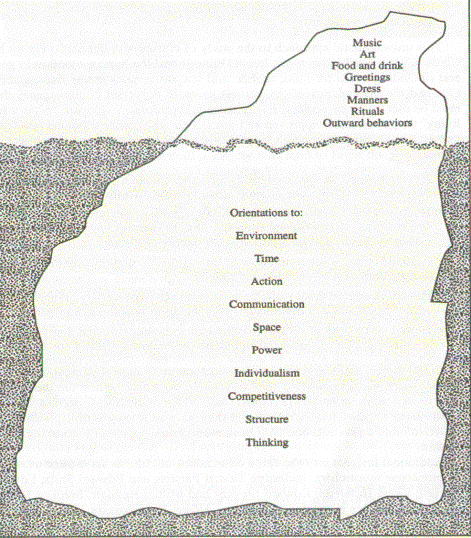
b) Reducing the cultural differences
to "above the sea-level" features will not help you to understand the underlying
differences and will not help you to understand the relativeness of your
own
cultural behaviour.
Let us try to understand the "Why?"
behind some different behaviours and customs for some typical
occurences:
Examples
- telling the truth / being
polite
- punctuality /
flexibility
- quoting sources / following
mainstream
- learning from theories / learning
from examples
Please form four groups and develop
a list of 5 Do's and 5 Don't for Germany and for another country
of your choice. Try to analyse the cultural reasons behind the behaviour using
your background knowledge (including Hofstede).
After 20 minutes each group should present the list
and the explanations.
|