|
Many intercultural trainings concentrate on the "Do's and Don'ts" of different
cultures:
- Give and receive a namecard to a
Chinese persons always with both hands
- Avoid the number 13 in western
countries
- Do not give knifes or scissors as
a present in China
- Do not slap a German person on
the shoulder as a greeting
- Do not give money as a gift in
Bulgaria ... etc.
Two arguments against such superficial approaches:
a) For an internationally active
manager, it is impossible to know the "Do's and Don'ts" of all cultures and
sub-cultures (always use a 100 US$ bill when snorting cocaine at a Manhattan
party...) in the world.
b) Reducing the cultural differences
to "above the sea-level" features will not help you to understand the underlying
differences and will not help you to understand the relativeness of your
own
cultural behaviour.
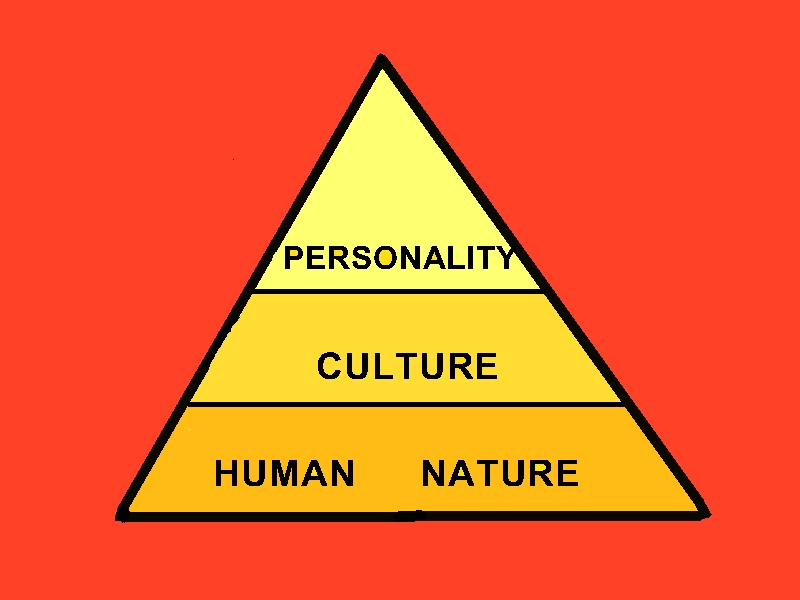
Culture is - according to Hofstede -
acquired through “mental programming”, learned patterns of thinking, feeling and potential acting.
Three level of uniqueness are distinguished:
- The inherited universal human nature,
- the learned culture specific to certain societies or groups within a society, and
- the inherited and learned individual personality.
Example: Language
Let us try to understand the "Why?"
behind some different behaviours and customs for some typical
occurences:
Examples
- telling the truth / being
polite
- punctuality /
flexibility
- quoting sources / following
mainstream
- learning from theories / learning
from examples
Example Sinus groups
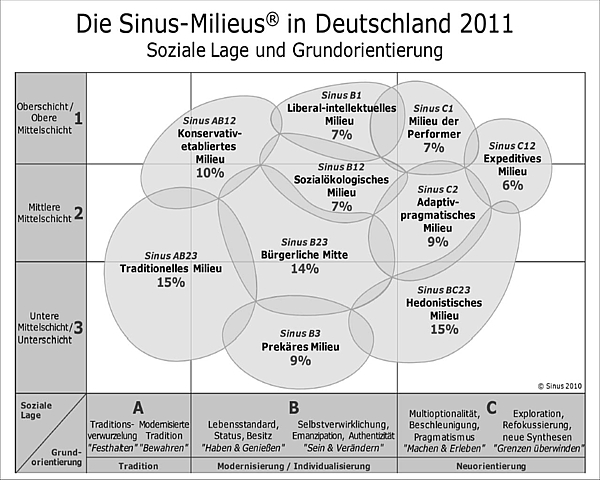
Im August 2010 hat das Institut Sinus Sociovision ein verändertes Gesellschaftsmodell Deutschlands vorgestellt. Es verschwand das sogenannte Milieu der DDR-Nostalgiker und ging zum Teil in das prekäre Milieu auf, hinzu kam das expeditive Milieu.
Sinus-Milieus mit ihren Definitionen:
- Konservativ-etabliertes Milieu: Klassisches Establishment mit Exklusivitäts- und Führungsanspruch, zeigt aber auch Tendenz zum Rückzug
- Liberal-Intellektuelles Milieu: Aufgeklärte Bildungselite mit liberaler Grundhaltung und postmateriellen Wurzeln, hat starken Wunsch nach Selbstbestimmung
- Milieu der Performer: Effizienz-orientierte Leistungselite, denkt global, hohe IT-Kompetenz, sieht sich als stilistische Avantgarde
- Expeditives Milieu: Unkonventionelle, kreative Avantgarde, individualistisch, sehr mobil, digital vernetzt, sucht nach Grenzen
- Bürgerliche Mitte: Leistungs- und anpassungsbereiter Mainstream, bejaht die gesellschaftliche Ordnung, strebt nach beruflicher und sozialer Etablierung sowie nach Sicherheit und Harmonie
- Adaptiv-pragmatisches Milieu: Zielstrebige, junge Mitte der Gesellschaft mit ausgeprägtem Lebenspragmatismus und Nutzenkalkül
- Sozialökologisches Milieu: Idealistisch, konsumkritisch, globalisierungsskeptisch, besitzt ausgeprägtes ökologisches und soziales
Gewissen
- Traditionelles Milieu: Ordnungsliebende Kriegs- und Nachkriegsgeneration, kleinbürgerlich oder der Arbeiterwelt verhaftet
- Prekäres Milieu: Um Teilhabe bemühte Unterschicht, Zukunftsangst und Ressentiments
- Hedonistisches Milieu: Spaß- und erlebnisorientiert, verweigert sich den Konventionen und Leistungserwartungen der Gesellschaft
Sinus UK

Please form two groups and discuss:
How could the sinus approach be used in connection to a hofstedian approach?
How would you use the Hofstede and the Sinus approaches in selecting the right person for filling a vacancy in your management team?
After 20 minutes each group should present the lists
and the explanations.
|