

Why is it necessary to know about cultural differences in tourists behaviour?
EXAMPLE CONSEQUENCES OF CULTURAL DIFFERENCES:
SHOPPING
BEHAVIOUR OF
CHINESE AND GERMAN TOURISTS
|
Chinese tourists |
German tourists |
|
Shopping a main activity during leisure trip, scheduled |
Shopping incidental activity during holiday trip, not scheduled |
|
|
|
|
Cultural aspects of behaviour |
|
|
|
|
|
Follow majority |
Find something special |
|
Believe in authorities, celebrities |
"Own" taste |
|
Satisfy own dignity |
Check affordability |
|
Showing off with luxury |
Showing taste |
|
Typical products |
Handmade, "authentic" products |
|
Either very cheap or very expensive |
“Preis-wert” |
|
Souvenirs relationship orientated (presents) |
Souvenirs
friendship orientated |
|
Buy more than you need |
A little extra |
|
Always bargain |
Clear, comparable price |
|
Cash against product, checking product |
Trust, consumer protection |
|
|
|
How much international knowledge do we have?
|
Which different countries are the members of this group coming from? Which
countries have the members of this group already visited
|
b) Demand and Supply Approaches
Tourism theories and concepts can be divided in
demand side orientated and supply side orientated approaches.
|
Demand-side orientated: Looking at tourism through the eyes of the consumers. Examples: All parts of destination part of product. Destination defined by visitor. UNWTO definition: Most social scientists have demand-side orientation. Over-supply in post-industrial societies leads to concentration on demand side. Demand-side orientated definition
of tourism demand: |
|
Supply-side orientated: Looking at tourism from producers point of view. Examples: Direct and derived (abgeleitetes) product. Destination defined by political border and financing. Pearce/Morrison/Rutledge definition: Most economic scientists (especially in Germany) have supply-side orientation. Under-supply in industrial societies lead to concentration on supply side. Supply-side orientated definition of
demand: |
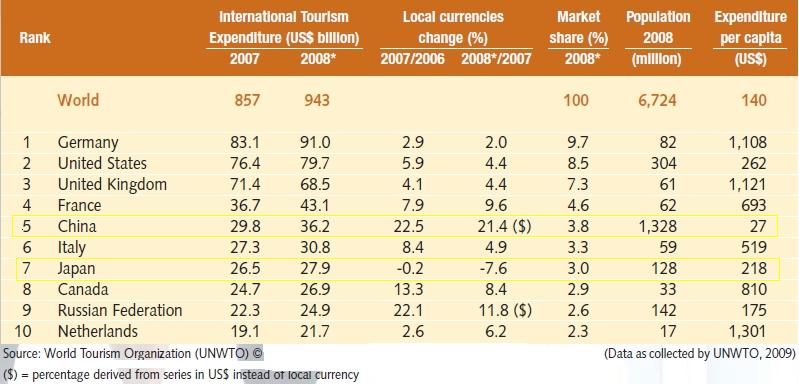
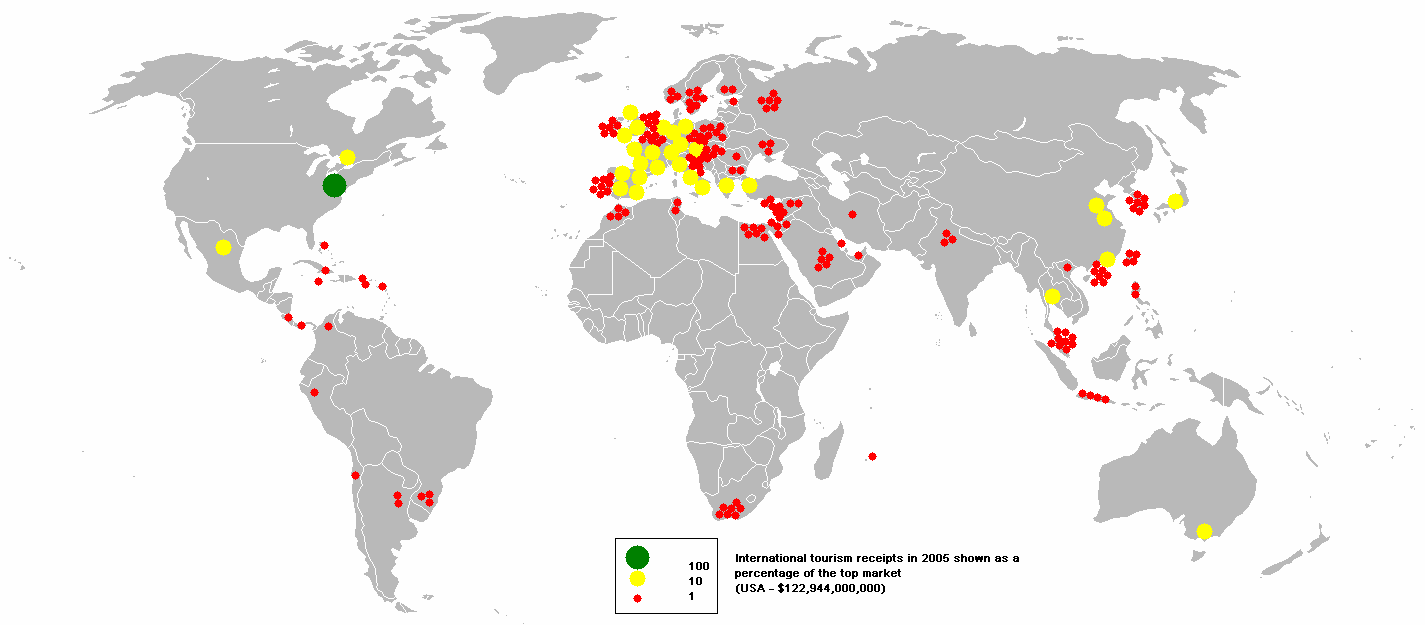
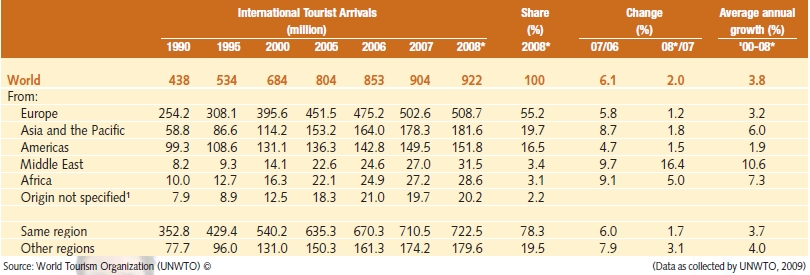
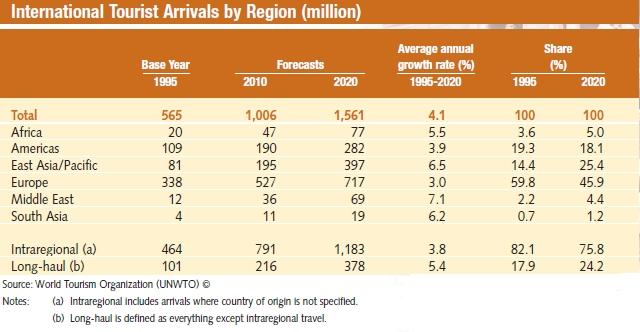
Asia as part of Global International Tourism
2005 International Tourism Receipts (USA = 100)

|
--> QUANTITATIVE RESULT:
|
|
BUT also qualitative differences: Asians as tourists are different from European tourists, in traditions, behaviour, expectations, perception patterns.
|
|
What kind of travel traditions, behaviour, expectations, perception patterns and organisation can you imagine/ do you know which might be different in different countries/cultures? Do you think there are big, fundamental differences or only small, gradual differences between different cultures and countries in these fields?
|
MASLOW's PYRAMID
A western idea:

The pyramid in Asian societies:
John Ap (2006)