Best viewed with
Internet Explorer.
TOURISM POLITICS
IN JAPAN
Nation-building
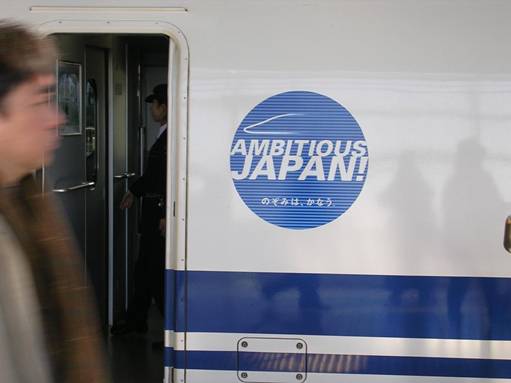
‘Ambitious Japan’, as it calls itself in English on the new Shinkansen
700 trains, today appears as an insular, industrial society stranded in a
globalised postindustrial world, trying to retain (mainly imagined)
pre-industrial values. Whereas many societies are in a process of changing from
"World as a theater" to "World as a workshop", the japanese society sticks to
bolted-on masks.
‘Inventing Japan’ (Buruma 2003) after 1853 meant the double and
contradictory task of ’restoring’ the rule of the Emperor, the Shinto
religion and ‘national’ pride through attempts of catching up with
'modernity' to become a leading member of modern
nations.
Three major attempts to
achieve this failed in 1921, 1945 and 1990.
In the development of Japanese domestic tourism this is reflected in the
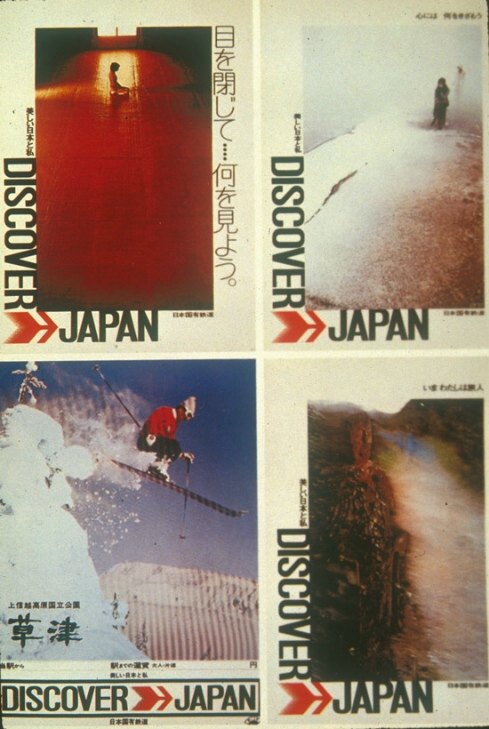
successful decade-long marketing campaigns of “Discover Japan” in the 1970s and
“Exotic Japan” in the 1980s.
‘Discover Japan’, starting after the EXPO in Osaka, appealed to young (mainly
female) Japanese not to visit meishos (noted places) but rather to
find the spirit of the ‘old’ Japan in encounters with it and therefore to find
themselves.
“Although this Japan was billed as native and original, it was a Japan in
many ways unknown to its young urban travellers. .. Japan beckoned as something
strangely familiar: the native remote.” (Ivy 1995, 47)
‘Exotic Japan’ took the nostalgic longing one step further: Stylish and arty in
appearance, it enticed to travel within Japan not to rediscover "old" Japan, but
the nostalgia for it, the lost feeling of the feeling of loss.
Furusato (old hometown) tourism is another important part of domestic
tourism of inventing the nation and "reconstructing selected images of the
Japanese people’s traditional way of life." (Moon 1997, 185)
|