|
|
Best viewed with Internet Explorer.
(3) Page 6
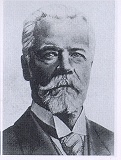
Henri Fayol (1841 - 1925)
 Henri Fayol seperates
in his book "Administration industrielle et
generale" five main tasks for a
manager: Henri Fayol seperates
in his book "Administration industrielle et
generale" five main tasks for a
manager:
|
- planning
- organizing
- commanding
-
coordinating
activities
- controlling
performance
|
|
Fayol laid down the
following 14 principles of management:
- Specialization of
labor.
Specializing encourages continuous improvement in skills and the development of
improvements in methods.
- Authority. The right to give orders and the
power to exact obedience.
- Discipline. No slacking, bending of
rules.
- Unity of
command. Each
employee has one and only one boss.
- Unity of
direction. A
single mind generates a single plan and all play their part in that
plan.
- Subordination of Individual
Interests.
When at work, only work things should be pursued or thought
about.
- Remuneration. Employees receive fair payment for
services, not what the company can get away with.
- Centralization. Consolidation of management
functions. Decisions are made from the top.
- Scalar Chain (line of
authority).
Formal chain of command running from top to bottom of the organization, like
military.
- Order. All materials and personnel have a
prescribed place, and they must remain there.
- Equity. Equality of treatment (but not
necessarily identical treatment)
- Personnel
Tenure.
Limited turnover of personnel. Lifetime employment for good
workers.
- Initiative. Thinking out a plan and do what it
takes to make it happen.
- Esprit de corps. Harmony, cohesion among
personnel.
  
Contact: wolfgang.arlt@fh-stralsund.de
Office: 1/132, Tel. (03831) 45 6961
|
|

