FH Stralsund
- Leisure and Tourism Management
Prof. Dr. Wolfgang Arlt WS 2002/2003

|
|
FH Stralsund
- Leisure and Tourism Management
|
|
|
You are on www.tourismus-museum.de |
Best viewed with Internet Explorer |
|
TI |
Tourism Impact |
Mo. 14.00-17.15 h all Sem |
Indicators of Sustainability - Destination21 in Denmark
Introduction
"Sustainable tourism development meets the needs of present tourists and host regions while protecting and enhancing opportunity for the future. It is envisaged as leading to management of all resources in such a way that economic, social, aesthetic needs can be fulfilled while maintaining cultural integrity, essential ecological processes, biological diversity, and life support systems.
Sustainable tourism products are products, which are operated in harmony with the local environment, community, and cultures, so that these become the permanent beneficiaries not the victims of tourism development".
'Agenda 21 for the Travel and Tourism Industry: Towards Environmentally Sustainable Development', 1997
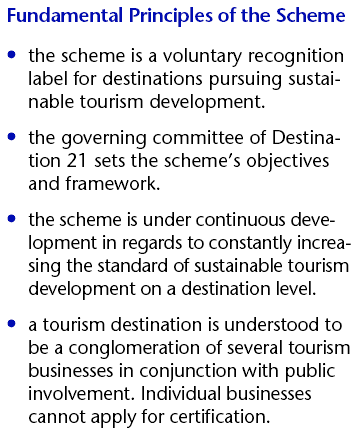
Certification programmes for tourism destinations reflect the need to address the concept of sustainable tourism development on a higher level than previous initiatives. Destination certification programmes require that the goal of sustainable development is achieved at the destination level, thus all stakeholders of the destination with a vested interest in tourism must cooperate and integrate their efforts in order to achieve sustainable tourism development.
Destination21 was started by the Danish Tourist Board and the Tourism Development Centre in 1997.

page
2 Introduction
page 3
The 'Top-down' and
'Bottom-up' Approach
page
4 Elements
of Destination 21
page 5
The Eight Sustainability
Goals
page 6
Sustainability Indicators
page 7 The
Destination 21 Process
|
Contact: wolfgang.arlt@fh-stralsund.de,
Office: Hs.
1 / Rm. 132, |
 |